
Retail inflation dipped marginally to a nearly six-year low of 3.34 per cent in March due to a decline in prices of vegetables and protein-rich items. The Consumer Price Index (CPI) based inflation was 3.61 per cent in February and 4.85 per cent in March last year.

Lavrov said that the US has set itself the objective of 'achieving economic domination', adding further to it that Americans want to control the routes to leading countries to provide its energy sources to them.

India's year-on-year inflation rate as measured by the consumer price index rose to 3.43 per cent in January from 3.2 in December, a government statement said on Wednesday.

Notwithstanding global headwinds, the Indian economy saw further momentum in October on the back of goods and services tax (GST) rate rationalisation and festival spending, as indicated by high-frequency indicators, the Reserve Bank of India's (RBI's) monthly State of the Economy report said.

Driven by GST reforms, robust festive demand, and softening raw material prices, the FMCG industry expects volume-based growth, supported by a mid-single digit revenue rise and improved operating margins in the December quarter.

Prospects of a bumper kharif harvest are expected to lower food inflation in the coming months, making the country's inflation outlook benign, the Union Ministry of Finance (FinMin) said in its monthly economic report for October released on Monday.

Silver prices rallied sharply by Rs 15,000 to hit a lifetime high of Rs 265,000 per kg in the national capital on Monday, and gold advanced to a fresh record of Rs 144,600 per 10 grams, mirroring strong gains in the global markets.

The Reserve Bank on Wednesday revised upward its growth estimates for the current fiscal year to 6.8 per cent and lowered its inflation projection to 2.6 per cent based on an above-normal monsoon and the rationalisation of GST rates.

The main increase was seen in the prices of vegetables, with the index rising by 2.98 per cent month-on-month to 120.8 points, while the index for milk and milk products went up by 1.52 per cent to 120.4 points.
Wholesale price based inflation declined to a 3-month low of 1.89 per cent in November on cheaper food items, and experts predicted a 0.25 per cent interest rate cut by the RBI in the policy review in February. The Wholesale Price Index (WPI) based inflation was 2.36 per cent in October 2024. It was 0.39 per cent in November, last year. In August, 2024, it was 1.25 per cent.

Passengers may think they are just booking a ticket, but airlines' clever design tricks are quietly picking their pockets.
Retail inflation slipped to seven-month low of 3.61 per cent in February mainly due to easing prices of vegetables, eggs, and other protein-rich items, creating space for the RBI to go for another cut in interest rate next month.

However, it may still not change its stance on the policy rate as inflationary pressures are coming from high commodity prices.

Finance Minister Nirmala Sitharaman's biggest challenge will be to find a new growth driver, particularly against the backdrop of a global economy ravaged by heightened uncertainty and fragmentation, financial markets on a precipice, and global commodity prices on a continued uptrend.

Retail inflation slowed to a four-month low of 5.22 per cent in December compared to 5.48 pc in November, mainly due to easing of prices in food basket, according to government data released on Monday. The inflation based on Consumer Price Index (CPI) was 5.48 per cent in November and 5.69 per cent in December 2023.

Uncertainties over the impact of the United States' (US') tariffs on India, along with the ongoing transmission of past rate cuts, prompted the members of the Reserve Bank of India's Monetary Policy Committee (MPC) to maintain the status quo during the August meeting, the minutes showed. While some of the external members highlighted their concern over growth, the internal members cited the one-year headline inflation rate overshooting the 4 per cent target.

Continuing the downward trend, retail inflation fell to a five-month low of 4.31 per cent in January, mainly due to a decline in the prices of vegetables, eggs, and pulses. The Consumer Price Index-based retail inflation was 5.22 per cent in December and 5.1 per cent in January 2024. The previous low inflation was in August 2024 at 3.65 per cent.

Gold and silver prices are poised to maintain their record-setting rally in the coming week as investors focus on global inflation data and key macroeconomic indicators that shape central bank policy paths, analysts said.

The wholesale price index-based inflation remained in the negative territory for the seventh straight month in October at (-) 0.52 per cent, on easing prices of food items. The WPI-based inflation rate has been in the negative zone since April and was at (-) 0.26 per cent in September, 2023. In October last year, WPI was at 8.67 per cent.

Retail inflation eased to a nearly six-year low of 3.16 per cent in April mainly due to subdued prices of vegetables, fruits, pulses, and other protein-rich items, creating enough room for the Reserve Bank to go for another round of rate cut in the June monetary policy review. The Consumer Price Index (CPI) based inflation was 3.34 per cent in March and 4.83 per cent in April 2024. It was 3.15 per cent in July 2019.

Soaring vegetable prices pushed the retail inflation rate to a nine-month high of 5.49 pr cent in September, according to government data released on Monday. The consumer price index (CPI)-based retail inflation rate was 3.65 per cent in August and 5.02 per in September 2023. The previous high inflation rate was witnessed in December 2023 at 5.69 per cent.

Leading FMCG companies reported a decline in margins in the September quarter on account of higher input costs and food inflation, which ultimately slowed down the pace of urban consumption. Rising prices of commodity inputs such as palm oil, coffee and cocoa were also accentuated and some FMCG firms have hinted at a price hike. HUL, Godrej Consumer Products Ltd (GCPL), Marico, ITC, and Tata Consumer Products Ltd (TCPL) have expressed concerns over squeezing urban consumption, which according to industry experts forms 65-68 per cent of FMCG total sales.

Retail inflation breached the Reserve Bank's upper tolerance level, soaring to a 14-month high of 6.21 per cent in October mainly on account of rising food prices. Inflation based on the consumer price index (CPI) was 5.49 per cent in September and 4.87 per cent in the year-ago month. Retail inflation trended below the RBI's upper tolerance band of 6 per cent since September last year.

India's net revenues from the Goods and Services Tax (GST) rose at a three-month high pace of 10.7 per cent in August even as growth in gross collections slowed to 6.5 per cent from 7.5 per cent in the previous month, thanks to a nearly 20 per cent decline in refunds to taxpayers during the month.
Wholesale inflation fell to a 4-month low of 1.31 per cent in August due to a decline in prices of vegetables and fuel, even though onion and potato prices spiked, according to official data released on Tuesday. Wholesale price index-based inflation fell for the second straight month in August after it hit a high of 3.43 per cent in May. Inflation in July was 2.04 per cent. In August last year, WPI inflation was (-) 0.46 per cent.

The wholesale price index-based inflation remained in the negative territory for the sixth straight month in September at (-)0.26 per cent, on easing prices of food articles. The WPI-based inflation rate has been in the negative since April and was (-)0.52 per cent in August. In September last year, it was 10.55 per cent.

The short-term inflation outlook for India is benign, and the expectation of a normal monsoon and moderating global prices of key imported items give credence to the projections made by the RBI and IMF, the Economic Survey said on Monday. However, to ensure long-term policy stability, the Survey 2023-24 suggested making focused efforts to increase the production of major oilseeds, expanding the area under pulses, and assess the progress in developing modern storage facilities for specific crops.
Higher inflation might just be the necessary cost that we need to bear in making a transition to a higher growth trajectory.

The Indian services sector growth touched an 11 month high in July, supported by a pickup in new exports orders and sharp rise in overall sales, a monthly survey said on Tuesday. The seasonally adjusted HSBC India Services PMI Business Activity Index was at 60.5 in July, little-changed from 60.4 in June, and the rate of expansion was the best seen since August 2024.

Reserve Bank of India (RBI) Governor Sanjay Malhotra said the repo rate cut in the February meeting of the monetary policy committee (MPC) was due to inflation aligning with the target and recognising the fact that monetary policy is forward-looking.

Wholesale price-based inflation remained in the negative territory for the fifth straight month in August at (-)0.52 per cent, but prices of food articles and fuel showed an uptick. The wholesale price index (WPI) based inflation rate has been in the negative since April and was (-)1.36 per cent in July. In August last year it was 12.48 per cent. Inflation in food articles remained in double digit at 10.60 per cent in August, lower than 14.25 per cent in July.

Stock markets are likely to trade in a range-bound manner in a holiday-shortened week where trading activity of foreign investors, currency movement and global macroeconomic data announcements are expected to drive sentiments, analysts said. Several global markets may see subdued activity on account of Christmas and New Year holidays, an expert said.
Retail inflation in August inched up to 3.65 per cent, though vegetables and pulses witnessed price rise in double digits, according to official data released on Thursday. The retail inflation based on the Consumer Price Index (CPI), however, remained below the Reserve Bank's median target of 4 per cent for the second month in a row. It was at a five-year low of 3.6 per cent in July.

Despite a strong 7.8 per cent growth in the first quarter, the Indian economy is expected to grow at 6.5 per cent in the current financial year as the impact of US tariffs on Indian exports will reduce prospects, particularly in the second half, ADB said on Tuesday.

The Reserve Bank on Friday retained inflation projection at 4.5 per cent for the current financial year, lower than 5.4 per cent in the last fiscal. Assuming a normal monsoon this year, CPI (consumer price index-based) inflation for the current year is projected at 4.5 per cent, with Q1 at 4.9 per cent, Q2 at 3.8 per cent, Q3 at 4.6 per cent, and Q4 at 4.5 per cent.

An article on 'State of the Economy' in the monthly Bulletin also said the improvement in the outlook for agriculture and the revival of rural spending have turned out to be the bright spots in the evolution of demand conditions. Consumer price inflation ticked up in June 2024 after three consecutive months of moderation as a broad flare-up in vegetable prices halted the overall disinflation that had been underway, it said.

The government expects onion prices to fall below Rs 40 per kilogram by January from the current average price of Rs 57.02 per kilogram, Consumer Affairs secretary Rohit Kumar Singh said on Monday. Last week, the government banned onion exports till March next year after the retail sales price of the kitchen staple crossed Rs 80 per kg in the national capital and the prices in mandis remained around Rs 60 per kg. To a query on when the onion prices are expected to fall below Rs 40 per kg, Singh said, "very soon... January"
Retail inflation rose at the fastest pace in four months in December 2023 at 5.69 per cent, on account of an increase in prices of vegetables, pulses, and spices, according to government data released on Friday. The annual inflation based on Consumer Price Index (CPI) was at 5.55 per cent in November and 5.72 per cent in the year-ago month. As per the data released by the National Statistical Office (NSO), the rate of price rise in the food basket, which constitutes nearly half of the CPI, increased to 9.53 per cent in December 2023, as against 8.7 per cent in the preceding month, and 4.19 per cent in December 2022.

India's manufacturing sector activity strengthened in October, buoyed by Goods and Services Tax relief, productivity gains and tech investment, even as international sales rose at a weaker pace, a monthly survey said on Monday.
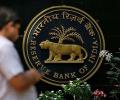
While participants in the domestic financial market are expecting a 25 basis-point policy repo rate cut in the December meeting of the Monetary Policy Committee (MPC) of the Reserve Bank of India (RBI), economists remain torn between a reduction in rate cut and a pause.
 © 2026 Rediff.com - Advertise with us - Disclaimer - Privacy Policy - Sitemap - Feedback - About us - Terms of use - Grievances